
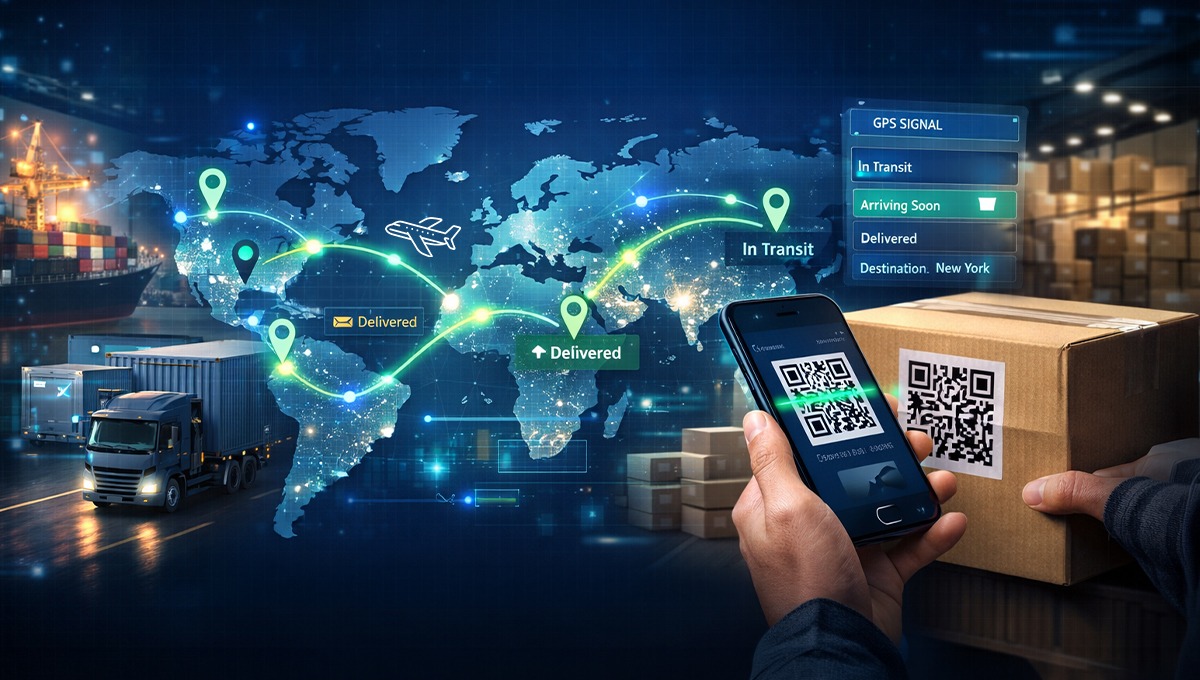
Visibility is now essential, along with speed, in today's logistics and supply chains. It means visibility, accountability, and proof regarding the origin, history of movements, and proper condition of products being transported through the chain. And for this reason, track and trace solutions have become increasingly important components of contemporary supply chain processes, since this way, it will be possible to track the movement of products within the process, thus avoiding counterfeiting and making sure that everybody involved in this process is fully confident about what they are doing. In this regard, one of the key aspects of the Track and Trace System is visibility, which is achieved through different approaches.
Understanding Track and Trace within a Supply Chain Framework
The term track and trace refers to assigning unique identifiers to products or shipments and monitoring them throughout the supply chain, which includes manufacturing, storing, dispatching, distribution, and delivery. In essence, tracking and tracing involve leaving an electronic trail that can be traced back at any point in the process. The importance of this process comes into play when it is important to trace the source of products or batches, for example.
A track-and-trace system can be used to ask several important questions about a product:
- Where has the product been manufactured?
- Which batch does it belong to?
- When has it been dispatched from the storage area?
- Has it been tampered with?
- Has the right location received the delivery?
These questions seem simple, yet challenging in the context of complex logistics operations.
The Need for Visibility in Businesses
Businesses today face complex supply chains in which their product will have to move through several hands before reaching the end user. The absence of visibility makes it difficult for businesses to maintain control over their product, its movement, and its authentication. It has also been made clear that which cites issues such as counterfeit products, lack of shipment visibility, product diversion, lack of compliance, loss of the supply chain, and poor accountability as potential hazards.
Visibility is not just a technical issue anymore; rather, it is a business necessity that enables businesses to react faster to any issues that might arise and minimize damage before it becomes an issue.
The Benefits of Track and Trace for Logistics
There are multiple benefits of having an efficient track and trace system. First, such a system does not just collect data but creates value through movement. In particular, it is identifying seven steps of its ecosystem, including serialization creation, intelligent labelling, manufacturing, dispatch integration, scanning, status check, delivery confirmation, and reporting.
- Improved Product Authentication
By giving individual products serial numbers, we can make sure that the product is authentic. This will help us avoid losses due to counterfeit products. In today’s market, encrypted QR, NFC, and RFID tags can provide product authentication and protection against tampering.
- Enhanced Monitoring of Shipments
The logistics team must always be aware of how the shipment is going. Is it moving? Was it tampered with? Has it arrived? All these questions are answered by the real-time tracking status. According to analysis, the monitoring process includes tracking the shipment when it is in transit, tampered with, duplicated, delivered, among other statuses.
- More Rapid Issue Identification
With traceability, unusual trends become more apparent. Multiple scanning attempts, route changes, duplicated scans, and failure to reach checkpoints are issues that need to be addressed and can help identify problems at an earlier stage, rather than later on when the damage is done. This helps prove the importance of traceability both for control and risk assessment purposes. The Analytics section of VCQRU covers all of these points.
Where Track and Trace Provides the Most Value
The concept of track and trace has multiple use cases in various industries, but this process plays an essential role in some fields where movement, compliance, and authenticity matter most. The track and trace applications can be for pharmaceuticals and healthcare, FMCG and consumer goods, automotive and spare parts, manufacturing, agriculture and seeds, and electronics and IoT.
Table showing the evolution of value based on different industries:
- Pharmaceuticals and Healthcare: Serialization, compliance, counterfeit protection.
- FMCG and Retail: Expiry and batch number tracking.
- Automotive and Spare Parts: Authentication, minimization of grey market risk.
- Manufacturing: Component and shipment tracking.
- Agro and Seds: Purity and seasonality.
- Electronics: Preventing warranty abuse and unauthorized devices.
From this information, it becomes clear that track and trace has a wide scope and can be applied to different businesses.
Technologies that Make Track and Trace Possible in the Modern Supply Chain
The modern traceability process relies on multiple technologies, rather than one. We employ QR code technology, NFC (Near Field Communication), RFID tags, GPS positioning, tampering indicators, barcode labels, smartphone scanning, brand portals, WhatsApp scanning verification, and USSD services for customers without smartphones. Such variety is needed due to the diverse users involved in the supply chain processes from factories through warehouses, distributors, dealers, and end-customers.
It should be noted as well that ideally, the track-and-trace processes should integrate seamlessly into logistics processes from the packaging line through the dispatching system and retail checking through reports.
What Qualifies as an Effective Track and Trace System?
A successful traceability program must be simple to install, dependable under stressful conditions, and robust enough to aid decision-making processes. This means that a successful traceability program must have the capability to provide:
- Identification number for products
- Encryption to create labels
- Scanning when moving around
- Real-time status update
- Verification from partners/customers/suppliers
- Reports and analysis
- Compliance and recall management
We offer the list of features in its suite of traceability process.
The Larger Context of Supply Chain Management
While track and trace help prevent fraud, it is actually about creating a more transparent, reliable, and responsive supply chain. Having the ability to trace back to the origin, the product becomes easier to manage. Consequently, the business obtains more control over quality and delivery processes, allowing for informed decision-making and improved client relations.
With increasing complexity within logistics networks, visibility becomes increasingly important. Trace and track technology will allow organizations to preserve product authenticity, ensure monitoring, prevent diversion, and enhance the whole supply chain. Moreover, it helps teams be ready for quick action on any delays, tampering, and duplication. For any logistics companies, manufacturers, FMCG, pharmaceutical, and other businesses with high movement, traceability is not an option anymore; it has become one of the most effective approaches to creating a smarter supply chain.
.jpg)