
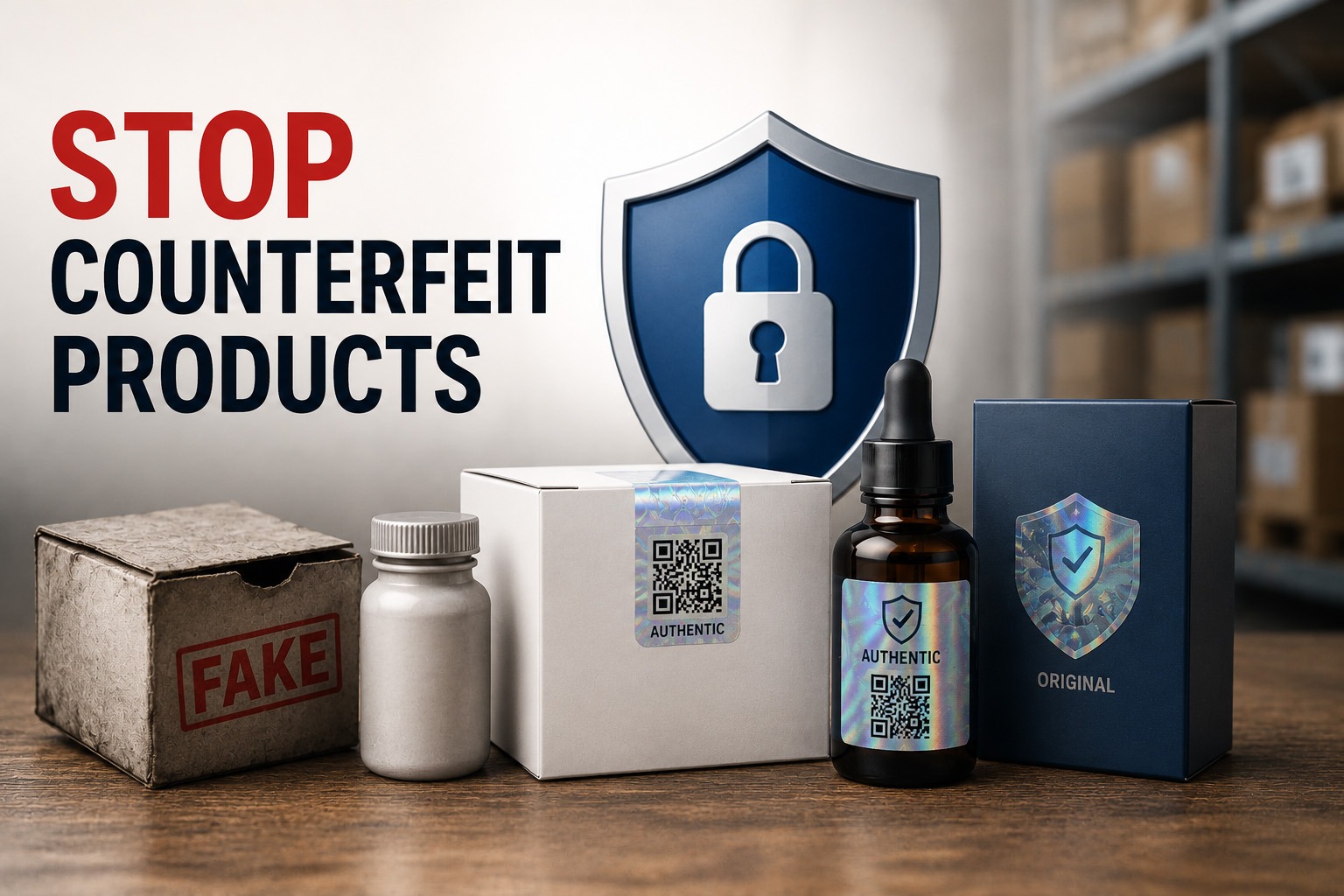
The problem of counterfeit products is a growing problem for companies in all industries. In FMCG and pharmaceutical products, automotive components, electronics, cosmetics, lubricants, and construction materials, the presence of counterfeit products may be difficult to identify due to complicated supply chains and illegal channels.
To fight against counterfeiting, companies must know how to stop counterfeit products from entering the market, not just how to detect fakes among their genuine products. Firms need to develop an approach which integrates product authentication, packaging, visibility of the supply chain, consumer knowledge, and monitoring.
What Are Counterfeit Products?
Counterfeits are imitations or unauthorized reproductions made to resemble the genuine products in appearance or packaging. Counterfeiters will reproduce the product design, packaging, label, barcode, logo, or even genuine product information to produce counterfeits that cannot be distinguished from authentic products.
This is because the traditional way of inspecting the product visually does not always work since the modern day counterfeiters have been able to reproduce the packaging and printing information of the product. This is why technology-driven means of verifying products are needed.
Why Is It Important to Stop Counterfeit Products?
The impact of counterfeits extends beyond the sales performance of the business in question. The implications that result from the existence of counterfeited goods include:
- Revenue and market-share losses
- Damage to brand reputation
- Reduced consumer confidence
- Increased customer complaints and returns
- Problems with distributor relationships
- Difficulty identifying unauthorized sellers
- Potential product-safety and compliance risks
- Increased costs associated with investigations and enforcement
An effective anti-counterfeit strategy will ensure that the brands and its consumers are protected from such risks.
How to Stop Counterfeit Products Effectively
1. Utilize Product Authentication Technologies
The best way to protect from counterfeiting is to provide each product or unit of a product with a unique digital identity. Secure QR codes, NFC, RFID, holograms, serial labels are some technologies that will help brands authenticate their products.
A consumer or a store owner will be able to scan the authentication code and get a result about the authenticity of the product. Thus, distinguishing between the authentic and questionable products becomes easier.
Today's authentication systems can also track the scanning behavior and help brands recognize some unusual behaviors which could indicate the existence of counterfeit activity. Our product authentication system called VCQRU is one of them.
Read Also: Why Authentic Brands Are Winning Customer Trust Today
2. Use Safe and Tamper-Resistant Packaging
Packaging is a very crucial aspect of counterfeit protection. Basic packaging is easy to replicate, but when several levels of security are included, the task becomes harder.
There are various security measures that brands may want to adopt:
- QR labels
- Holograms
- Near Field Communication or RFID technology
- UV features and microtext
- Tamper-evident seals
- Security adhesives
- Serialized labels
The above mentioned security measures can offer both visible and electronic protection simultaneously.
3. Give Every Product a Unique Identity
One of the main disadvantages of traditional product identification is that the same products have identical information. A unique serialized identity helps overcome this problem.
With every product having a unique code, businesses can link the tangible object to the digital information present on an advanced platform. The code could be linked to the information about the product, batches, manufacturing process, and authentications done.
It helps companies shift from just printing information on products to giving a digital identity to each product.
4. Facilitate Simple Consumer Verification
Consumers are an essential aspect of combating counterfeits. But, the verification process will not be helpful until the consumers find it easy to verify their products.
Some ways in which brands can facilitate consumer verification include:
- Mobile QR scanning
- Brand verification portals
- Verification through WhatsApp
- Use of mobile apps
- Use of USSD or any other convenient channel
The whole process of verification must be swift and easy for consumers to understand. After the consumers are able to ascertain if the product is real, fake, suspicious, or scanned, then they will be in a position to make an informed buying decision.
5. Monitor the Supply Chain
One way counterfeit goods can enter the market is by exploiting vulnerabilities in distribution networks and supply chains. As a result, firms should have visibility not only within their factory premises.
With the aid of track-and-trace technology, firms can watch their products as they pass through various phases in their supply chains. This can help them detect any abnormal movements and distribution patterns.
6. Spot Duplicate and Questionable Scans
An authentic product code can be replicated or reused by the counterfeiter. Therefore, having a QR code on the packaging alone is not sufficient. The technology that lies beneath the code has to monitor the authentication process.
For instance, scanning the same product several times from strange places might suggest the possibility of duplicate or unauthorized scanning.
Today’s product authentication systems can detect any suspicious behavior, log scans, and give alerts to brands. Thus, manufacturers will have the opportunity to investigate counterfeit cases without having to wait for complaints.
7. Customer Education and Partner Training
Technology needs to be supplemented by awareness. The customers need to learn how they can authenticate authorized products and verify them before they buy.
Brands can use different ways to educate their consumers such as:
- Packaging Instructions
- Social media campaigns
- Website content
- Retailer communications
- Product verification guides
- Customer services
Both distributors and retailers must also learn about product authentication and identification of any suspicious products.
Awareness among consumers will reduce the chances of buying fake products by them.
8. Physical and Digital Security Combination
No single technology exists to address all counterfeiting issues. The best solution to this problem involves integrating several security features.
Some of the combinations that could be used include:
Secure Label + Unique QR Code + Hologram + Product Serialization + Track & Trace + Consumer Verification
It will be hard for counterfeiters to duplicate this combination of authentication system.
VCQRU products integrate intelligent label, safe code, authentication, track and trace, analytics, and consumer engagement.
How VCQRU Helps Brands Stop Counterfeit Products
VCQRU delivers anti-counterfeit and product authentication solutions, aiming at protecting branded products from manufacturing until consumer verification.
The ecosystem of technologies used by the company features secure code generation, smart labels printing, integration with manufacturing line, consumer and partner verification, real-time authentication results, and fraud analytics. The brand may leverage the information obtained during the process of authentication in order to detect duplicate scans, suspicious actions, or even market leakage.
The platform also offers possibilities for connecting product authentication with customer engagement, thus turning it into a valuable marketing tool.