
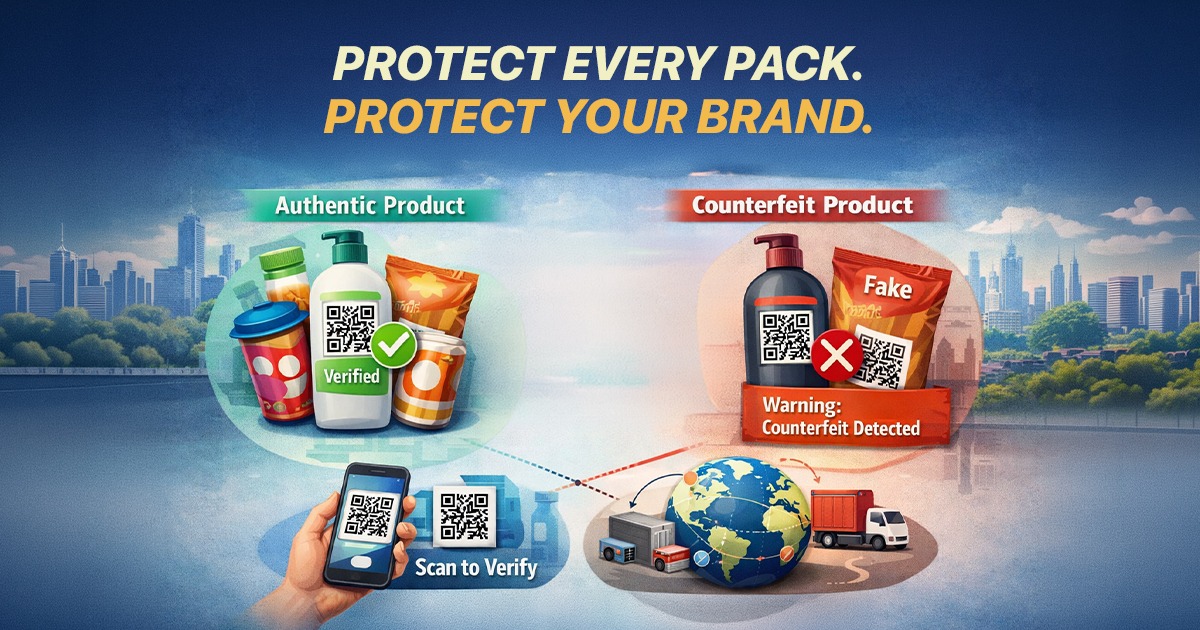
FMCG is a high-volume business characterised by rapid turnover and low margins. While this ensures a high growth rate for FMCG brands, it also makes them one of the most vulnerable sectors in the world.
From look-alike packaging to copycat barcodes and refilled containers, counterfeit products are eating away at FMCG brands’ profits and brand reputation. In 2026, however, look-alike packaging and copycat barcodes will not be a problem anymore.
The solution? Dynamic anti-counterfeit QR codes integrated with intelligent monitoring systems.
Why FMCG Brands Are Highly Vulnerable
FMCG products are:
- Widely distributed
- Frequently purchased
- Low verification priority for consumers
FMCG products include items such as cooking oil, packaged food items, beverages, cosmetics, and personal care items.
These products are rarely checked for authenticity by consumers.
This makes FMCG brands a favourite playground for counterfeiters.
Some of the most common types of counterfeits include:
- Duplicate packaging
- Grey-market diversion
- Refilled branded containers
- Unauthorized distribution
Without real-time verification, brands often discover the problem too late.
How Anti-Counterfeit QR Codes Work
Unlike static QR codes that link to a fixed webpage, dynamic anti-counterfeit QR systems function as intelligent authentication tools.
Let’s now discuss how Anti-Counterfeit QR codes help F&M Consumer Goods brands:
- Unique QR Per Unit
Each unit of the product comes with a unique QR code, which is created during the manufacturing process. No two units have the same QR code.
- Scan Count Monitoring
The Anti-Counterfeit QR code tracks the number of times the particular code is scanned.
- First scan → Genuine confirmation
- Repeated scans → Warning message
- Excessive scans → Suspicious alert
This prevents QR duplication fraud.
- Geo-Location Intelligence
Each time the Anti-Counterfeit QR code is scanned, the location is recorded. If the same code, assigned to a Delhi-based product, is scanned from another location, the brand team is alerted.
- Real-Time Dashboard Monitoring
Brand teams can now monitor the following with the help of the Anti-Counterfeit QR code:
- Scan frequency
- Region-wise activity
- Duplicate hotspots
- Consumer engagement trends
This turns packaging into a data-driven control system.
Static QR vs Dynamic QR: What’s the Difference?
|
Feature |
Static QR |
Dynamic Anti-Counterfeit QR |
|
Unique Per Unit |
❌ No |
✅ Yes |
|
Scan Count Logic |
❌ No |
✅ Yes |
|
Fraud Detection |
❌ No |
✅ Yes |
|
Real-Time Dashboard |
❌ No |
✅ Yes |
|
Geo Analytics |
❌ No |
✅ Yes |
Using static QR in 2026 for brand protection is like putting a lock on a door without checking if it’s already open.
Read Also: Dynamic vs Static QR Codes: Which Is Better for Brand Protection?
Business Benefits for FMCG Brands
- Revenue Protection
Saving crores in annual turnover due to a mere 2-3% reduction in counterfeits.
- Consumer Trust
Increased brand credibility by giving consumers a sense of assurance after scanning and confirming product authenticity.
- Market Visibility
Gain insights into which regions exhibit unusual scan trends.
- Engagement Opportunity
Verification via QR also presents opportunities for:
- Cashback rewards
- Loyalty points
- Product registration
- Feedback collection
Security becomes marketing.
Real-World Use Case Example
Imagine an FMCG brand with ₹150 Cr turnover.
If 3% of sales are counterfeit:
₹4.5 Cr lost annually.
If dynamic QR authentication reduces counterfeit exposure by even 40%:
₹1.8 Cr recovered.
System cost becomes negligible compared to recovered revenue.
FMCG brand protection is not about adding a hologram anymore, especially in 2026. FMCG brand protection is about creating a smart verification ecosystem where:
- Every unit is traceable
- Every scan is monitored
- Every anomaly is detected
Anti-counterfeit QR codes are not a cost; they're a revenue defence mechanism.
.jpg)
