
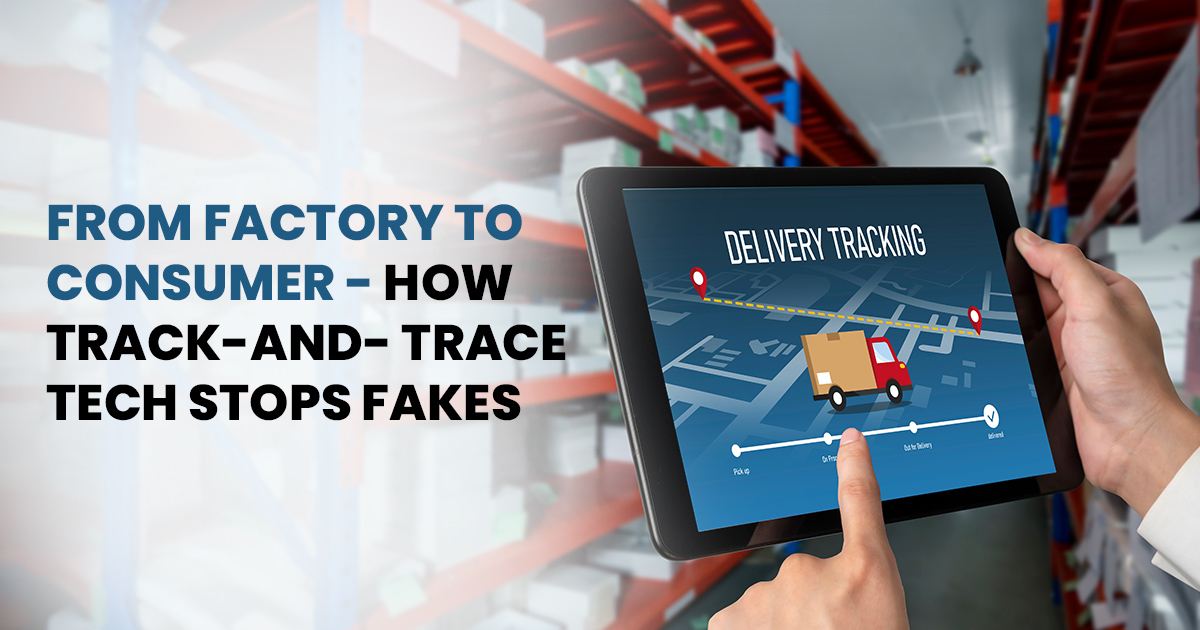
In a global supply chain where products travel across multiple warehouses, distributors, and retailers, knowing where your product is - and ensuring it’s genuine - has become critical.
Track-and-trace technology is revolutionizing how brands monitor product movement and protect their authenticity. From pharmaceuticals to auto parts, brands are using digital visibility to ensure every item reaching a customer is the real deal.
H2: The Problem - Complex Supply Chains, Easy Counterfeits
Modern distribution networks are vast and multi-layered. While this helps scale operations, it also opens doors for counterfeiters to sneak in fake products at any stage.
Without proper tracking, even a small leak in the chain can allow duplicates to enter legitimate markets - damaging trust and revenue.
H2: What Is Track-and-Trace Technology?
Track-and-trace is a digital monitoring system that logs a product’s journey from its origin (factory) to its destination (consumer). Each unit is assigned a unique digital identity, such as a QR code or barcode, which records data at every checkpoint - manufacturing, packaging, shipment, and sale.
H3: Key Components
- Serialization: Assigning unique identifiers to each product or batch.
- Aggregation: Connecting item data to cases, cartons, or pallets.
- Data Logging: Capturing timestamps, locations, and transaction IDs during product movement.
This creates a tamper-proof digital trail - a fingerprint for every product.
H2: Industry Applications
FMCG
Companies use track-and-trace to monitor production batches and detect counterfeit infiltration in high-demand areas.
Pharmaceuticals
The Drug Authentication & Verification Application (DAVA) framework by the Indian government mandates serialization and tracking for exported medicines - ensuring safety and compliance.
Automotive
Car part manufacturers use serialized QR codes to track spare parts, preventing the sale of fake or used components.
H2: Benefits of Track-and-Trace Systems
- Consumer Confidence
Consumers can scan and verify the entire product journey - creating complete transparency.
- Brand Protection
Every scan acts as proof that a product was legitimately produced and distributed.
- Operational Efficiency
Brands get real-time insights into logistics bottlenecks and market demand patterns.
- Regulatory Compliance
Governments worldwide are enforcing stricter product traceability norms - from food safety to pharmaceuticals.
H2: Data as a Competitive Advantage
- Each scan, shipment, and verification event generates valuable data.
- When analyzed properly, brands can identify unauthorized sellers, regional demand shifts, or even potential grey-market activity.
- Data transforms from a compliance tool into a strategic business advantage.
H2: The Future - AI and Blockchain Integration
- The next wave of track-and-trace will combine AI-driven predictive analytics with blockchain security.
- AI will help detect suspicious product movement before it becomes a crisis, while blockchain will ensure the integrity of every transaction record.
Conclusion
Track-and-trace is not just a security feature - it’s a symbol of accountability. By digitizing product journeys, brands can guarantee authenticity, enhance trust, and future-proof their supply chains against counterfeits.
.jpg)