
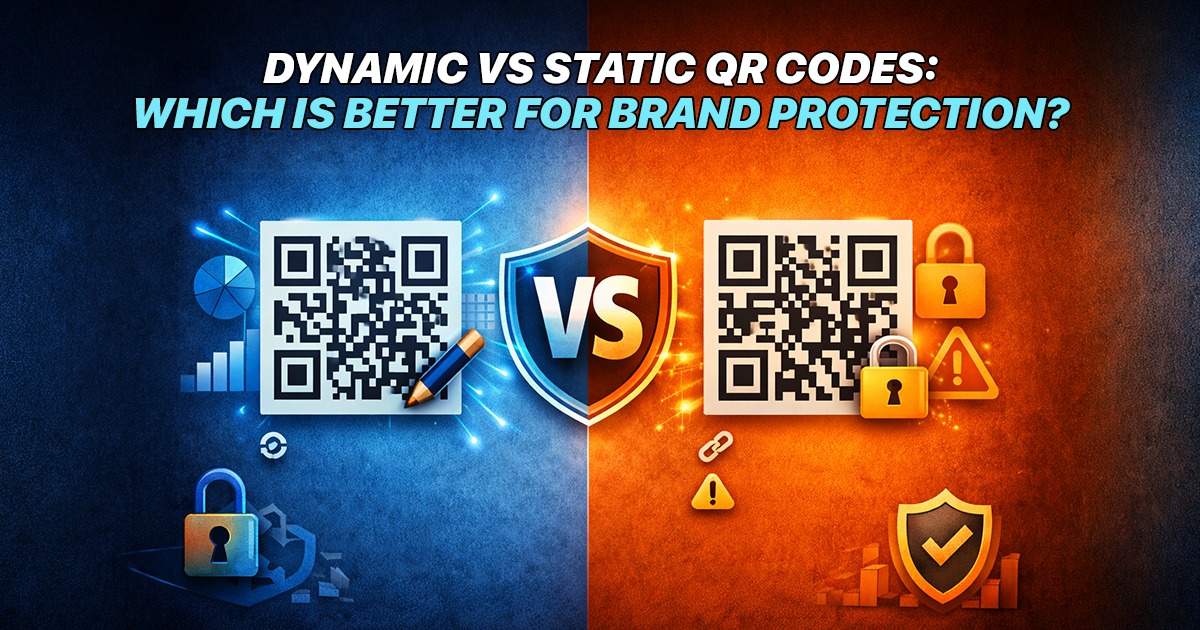
QR codes are everywhere in modern packaging. From product authentication to marketing campaigns, brands are increasingly relying on QR technology. However, not all QR codes are designed for security.
In 2026, brands must clearly understand the difference between static QR codes and dynamic anti-counterfeit QR systems. Choosing the wrong one can leave your brand exposed to duplication and fraud.
What Is a Static QR Code?
A static QR code links to a fixed destination URL.
It does not change.
It does not track scan count.
It does not monitor duplication.
Anyone can:
- Copy the image
- Reprint it
- Paste it on fake packaging
From a security standpoint, static QR codes offer almost no protection.
They are suitable for:
- Marketing campaigns
- Website redirection
- Informational content
But not for brand protection.
What Is a Dynamic Anti-Counterfeit QR Code?
A dynamic QR system is connected to a backend authentication engine.
Each code is:
- Unique per unit
- Trackable
- Monitorable
- Intelligent
When scanned, the system checks:
- Has this code been scanned before?
- How many times?
- From which location?
- Is the scan pattern suspicious?
Based on logic, it returns different messages.
Example:
- First scan → “Product is Genuine”
- Second scan → “Product Already Verified”
- Multiple scans → “Suspicious Activity Detected”
This is where real security begins.
Key Differences Between Static and Dynamic QR
|
Feature |
Static QR |
Dynamic QR |
|
Unique per product |
❌ No |
✅ Yes |
|
Scan tracking |
❌ No |
✅ Yes |
|
Geo-location logging |
❌ No |
✅ Yes |
|
Fraud detection |
❌ No |
✅ Yes |
|
Dashboard monitoring |
❌ No |
✅ Yes |
In brand protection, monitoring is everything.
Why Static QR Fails in Anti-Counterfeit Use
Imagine you print the same static QR code on 50,000 product units.
A counterfeiter copies that QR and prints it on fake packaging.
When a customer scans it, it still shows the brand website.
There is no way to detect duplication.
You lose visibility completely.
How Dynamic QR Strengthens Brand Protection
1. Duplication Detection
If one QR code appears in 10 different cities within hours, the system flags abnormal behavior.
2. Grey Market Monitoring
If products intended for Region A are scanned frequently in Region B, diversion is identified.
3. Consumer Engagement
Dynamic QR systems can also:
- Offer loyalty rewards
- Collect feedback
- Register warranties
Security + engagement = better ROI.
Business Perspective
A ₹100 Cr brand experiencing 3% counterfeit penetration loses ₹3 Cr annually.
If dynamic QR reduces exposure by 40%, that’s ₹1.2 Cr recovered.
The difference between static and dynamic QR isn’t technical.
It’s financial.
Conclusion
Static QR codes are useful for marketing.
Dynamic QR systems are essential for brand protection.
In 2026, intelligent authentication is not optional — it is strategic infrastructure.

.jpg)
